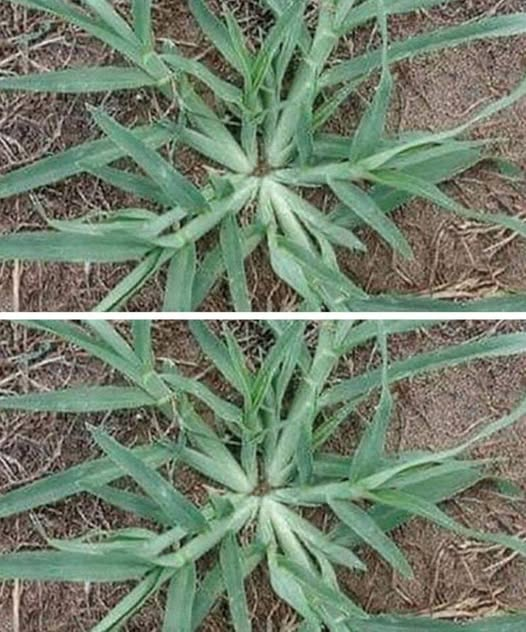
Social media feeds frequently feature close-up images of common invasive lawn weeds—most notably crabgrass (Digitaria) or goosegrass (Eleusine indica)—paired with alarmist headlines claiming they represent toxic environmental hazards, immediate soil-poisoning threats, or dangerous agricultural toxins. These viral posts exploit homeownership anxieties and gardening frustration to maximize clicks, shares, and sponsored product sales.
- The Engagement Farming Strategy: Content creators use repetitive, side-by-side macro images of standard weed rosettes to provoke curiosity and fear. By framing ordinary lawn weeds as mysterious “land-destroying superweeds” or hidden hazards to pets and families, these posts compel users to leave comments asking for chemical remedies, driving algorithmic reach.
- The Botanical Reality of Crabgrass and Goosegrass: The plant pictured displays the classic, radially flat “wagon-wheel” growth pattern of goosegrass or crabgrass. These are common annual grassy weeds that thrive in compacted, poorly drained, or nutrient-deficient soil where desirable turfgrass struggles to establish deep roots.
- Lack of Toxicity or Biological Danger: Contrary to viral claims that these plants release dangerous toxins into surrounding soil or pose immediate toxic risks to domestic animals, grassy weeds are non-venomous, non-toxic opportunistic species. Their primary impact is purely competitive—robbing surrounding turfgrass of water, light, and nitrogen.
