
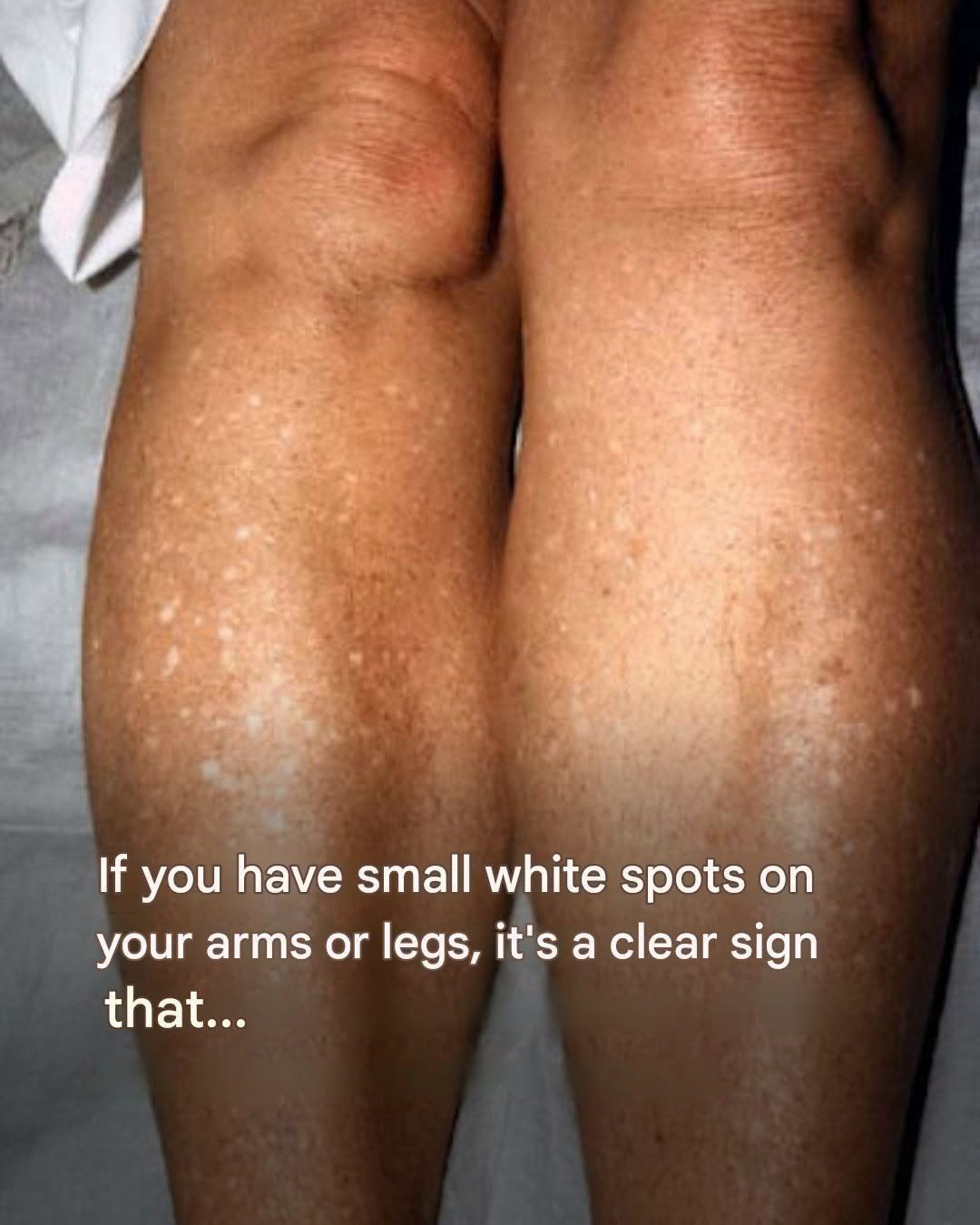
Social media platforms are filled with sensationalized medical graphics showing skin macules alongside unfinished text like “If you have small white spots on your arms or legs, it’s a clear sign that…” These viral posts exploit health anxieties to compel users to click, share, and generate ad revenue.
- The Clickbait Strategy: Content creators use suspenseful cliffhangers and visual triggers to create fear around common dermatological conditions. By implying that these harmless spots signify severe vitamin deficiencies, liver failure, or dangerous infections, the post drives anxious users to click through slideshows loaded with display ads and unverified supplement links.
- The Biological Reality of Idiopathic Guttate Hypomelanosis (IGH): The flat, porcelain-white spots shown on these lower legs are characteristic of Idiopathic Guttate Hypomelanosis (IGH). “Idiopathic” means the exact origin is unknown, “guttate” refers to their teardrop or small coin shape, and “hypomelanosis” indicates a localized reduction in melanin pigment within epidermal cells.
- Sun Exposure and Aging Mechanisms: IGH is a benign, non-contagious condition overwhelmingly linked to cumulative ultraviolet (UV) sun exposure over decades and the natural aging process. As skin ages, localized melanocytes (pigment-producing cells) gradually decrease in number or stop manufacturing melanin, leaving small, smooth, depigmented spots primarily on sun-exposed areas like the shins, forearms, and shoulders.
