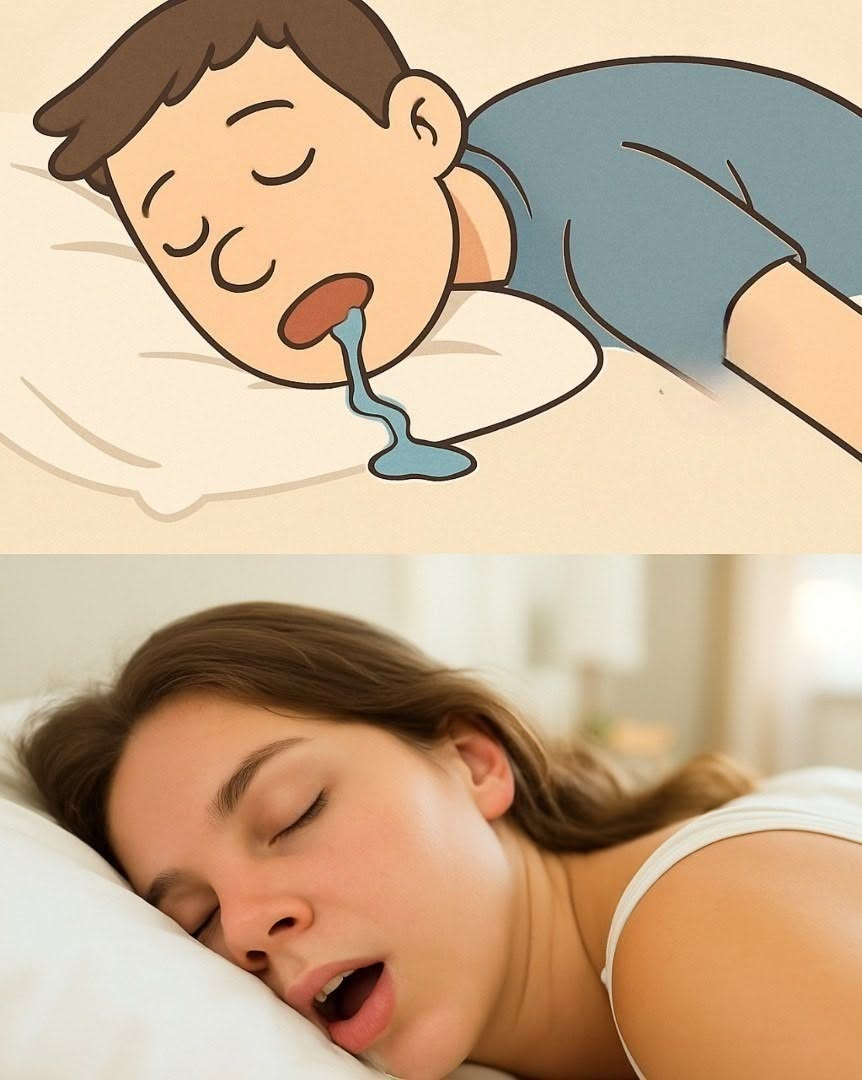
Part 2: Practical Daily Habits & Debunking Health Myths
Managing nocturnal drooling focuses on simple posture adjustments and clearing nasal airways rather than buying unproven internet hacks or worrying about social media scare tactics.
- Adjust Your Sleep Posture: Sleeping on your back (supine position) encourages natural swallowing reflexes during sleep and uses gravity to keep saliva in the back of the throat rather than pool against the lips.
- Clear Nasal Passages Before Bed: Use warm saline nasal rinses, steam inhalation, or nasal strips to clear sinuses and reduce nasal congestion. Keeping the nasal airway open allows you to sleep comfortably with your mouth closed.
- Hydrate and Maintain Oral Hygiene: Drink adequate water throughout the day to keep saliva thin and fluid. Brushing and flossing consistently before bed prevents excess oral bacteria buildup, which can stimulate elevated salivary production during the night.
- Debunking the Toxins and Parasites Myth: Viral health posts often claim that drooling during sleep is a primary sign of internal parasite infections or heavy metal toxicity requiring a “gut cleanse.” In reality, sleep sialorrhea is purely a mechanical result of gravity, muscle relaxation, and open-mouth breathing.
