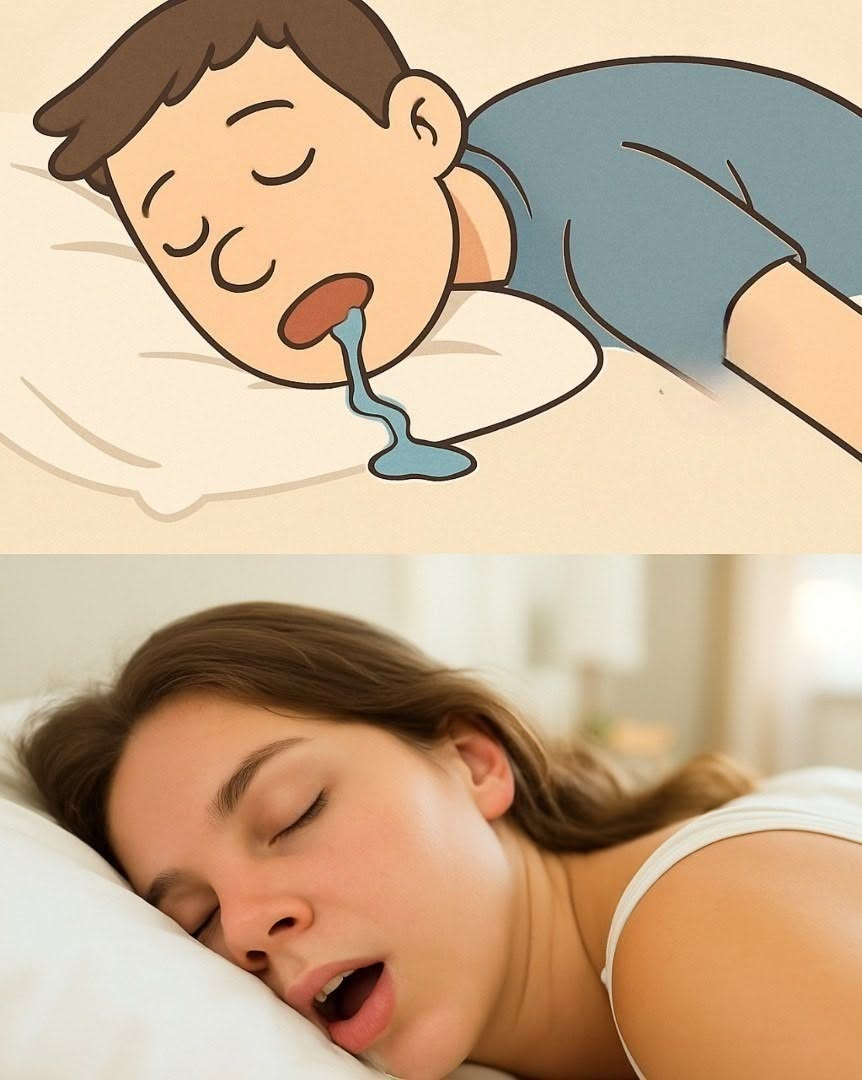
Social media feeds are flooded with viral health graphics showing illustrations and photos of people drooling or mouth-breathing while asleep, accompanied by sensationalized hooks warning of hidden brain damage, severe toxicity, or organ failure.
- The Clickbait Strategy: Content creators leverage exaggerated artwork, gross-out triggers, and cliffhanger text to exploit health anxieties and disgust. By framing a common nighttime occurrence—waking up with saliva on your pillow—as a alarming medical crisis, these posts compel users to click through multi-page slide decks packed with display ads, affiliate links, or unverified mouth-taping strips.
- The Biological Reality of Sleep Sialorrhea: Drooling during sleep (sialorrhea) is an overwhelmingly normal physiological event. Salivary glands constantly produce saliva to lubricate the oral cavity. During deep rapid eye movement (REM) sleep, facial muscles and swallowing reflexes naturally relax; when sleeping on your side or stomach, gravity simply pulls accumulated excess saliva out of the open mouth onto the pillow.
- Mouth Breathing Mechanics: Nasal congestion from seasonal allergies, mild inflammation, or a deviated septum forces automatic mouth-breathing during sleep. Breathing through an open mouth causes the lower jaw to drop, relaxing the lips and allowing normal salivary secretions to drain outward rather than being swallowed automatically.
