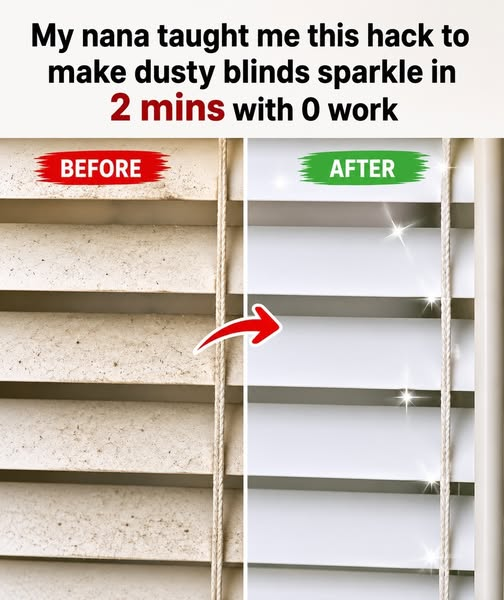
Social media feeds regularly circulate side-by-side cleaning graphics displaying filthy, spotty window blinds transforming into gleaming white slats alongside claims like “My nana taught me this hack to make dusty blinds sparkle in 2 mins with 0 work.” These viral posts exploit domestic chore fatigue and household maintenance frustration to maximize clicks, shares, and referral traffic.
- The Engagement Farming Strategy: Content creators use exaggerated visual contrasts, nostalgia hooks (“My nana taught me…”), and unrealistic timeframes (“2 mins with 0 work”) to capture attention. By withholding the exact method in the image, these posts force users to click through ad-heavy articles or engage in heated comment debates over household hacks.
- The Reality of Dust and Grease Adhesion: Dust on window blinds is rarely just dry, loose particles. Over time, ambient humidity, cooking oils, and skin oils create a sticky lipid layer that binds dust tightly to the slats. Removing this grime physically requires mechanical wiping and surface surfactants rather than a zero-effort spray or effortless trick.
- The Static Charge Factor: Wiping dry blinds creates a friction-induced electrostatic charge across plastic, vinyl, or painted wood slats. This static charge actively attracts airborne dust particles back to the surface within hours, making improper dry-dusting methods counterproductive.
