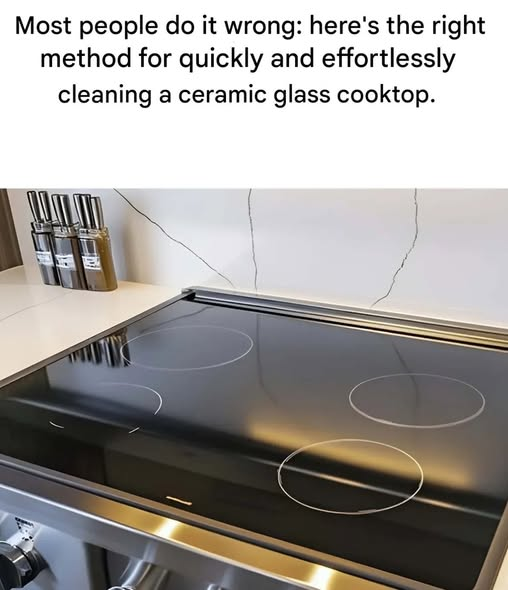
Social media platforms are filled with viral cleaning graphics featuring spotless glass stoves and superiority hooks like “Most people do it wrong: here’s the right method for quickly and effortlessly cleaning a ceramic glass cooktop.” These posts exploit domestic frustration over burnt-on grease and stubborn rings to drive clicks, shares, and ad revenues for home-hack blogs.
- The Engagement Farming Strategy: Content creators use pristine, showroom-quality imagery paired with patronizing framing (“Most people do it wrong”) to provoke self-doubt and curiosity. By teasing a single “effortless secret” without revealing it in the post, these graphics compel users to click through ad-choked slideshows or fight in the comments over harsh chemical recipes.
- The Material Reality of Ceramic Glass: Glass-ceramic cooktops are engineered to withstand extreme thermal expansion, but their glossy surface is susceptible to micro-abrasions and chemical dulling. Aggressive scrubbing pads, harsh abrasive powders, or abrasive household cleansers permanently scratch the glass, creating microscopic grooves where grease embeds even deeper in the future.
- The Thermal Pitting Mechanism: When sugary spills or boiled-over starches are left on a hot ceramic cooktop, they fuse directly with the glass surface as it cools. Attempting to scrub these residues off cold without softening them or using proper mechanical blade tools can chip or “pit” the glass surface permanently.
