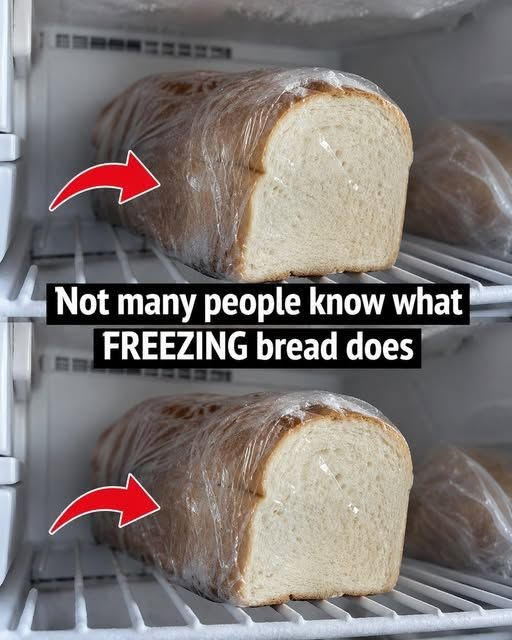
Social media feeds are flooded with dramatic food graphics featuring everyday items alongside clickbait hooks like “Not many people know what FREEZING bread does.” These viral posts often hint at mysterious health risks, secret biohacks, or dramatic chemical transformations to drive high user engagement and ad views.
- The Clickbait Engagement Strategy: Content creators use suspenseful text overlays and exaggerated arrows pointing to ordinary objects—such as a wrapped loaf of sandwich bread inside a freezer—to create a curiosity gap. By withholding basic food science information, these posts compel users to click through multi-page slideshows or scroll through ad-heavy articles seeking a grand revelation.
- The Starch Retrogradation Process: When fresh bread sits at room temperature, gelatinized starches begin to re-crystallize in a natural process called retrogradation, which gradually drives moisture out of the crumb and makes the loaf stale. Simply refrigerating bread actually accelerates retrogradation because cold, non-freezing temperatures (~4°C or 40°F) speed up starch recrystallization.
- How Freezing Pauses Stale Aging: Freezing bread below 0°C (32°F) drops the temperature far past the ideal zone for starch retrogradation. By locking water molecules into solid ice crystals quickly, freezing effectively freezes the bread’s molecular structure in time, stopping mold growth and staling entirely until it is thawed or toasted.
