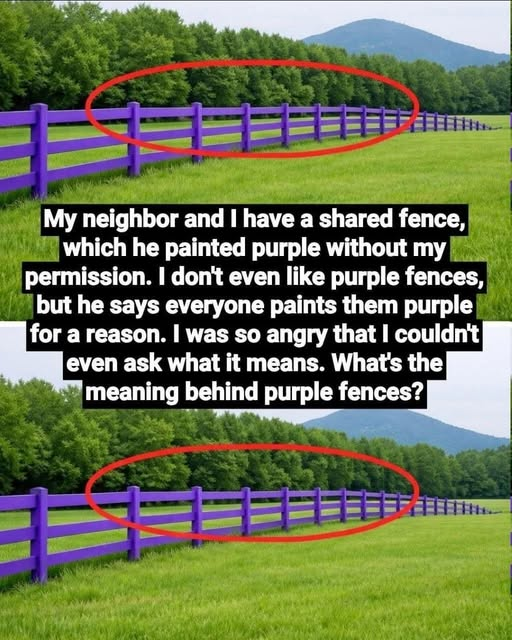
Viral social media graphics depicting vibrant, unnaturally bright purple fences alongside dramatic neighbor-conflict stories frequently circulate online. These posts exploit curiosity over boundary disputes and obscure local laws to farm comments, shares, and algorithmic reach.
- The Engagement Farming Strategy: Content creators use provocative text overlays depicting domestic outrage (“I was so angry…”) combined with prominent red circles highlighting a bright visual element. By turning a specific legal designation into a mysteries-of-the-world cliffhanger (“What’s the meaning behind purple fences?”), the post forces users to comment, debate, and share the post to reveal the answer.
- The Legal Purpose of “Purple Paint” Laws: In many U.S. states, purple paint on post tops or boundary trees serves a very specific, legally recognized function: it acts as a statutory “No Trespassing” marker. The law allows landowners to mark property boundaries clearly without relying on physical metal signs, which can rust, weather, or be torn down.
- The Sensationalized Distortion: Viral posts often exaggerate or alter the legal reality by displaying entire long, bright purple fences or implying that painting a shared fence without consent is standard protocol. In reality, statutory paint laws generally require only specific paint stripes or post-top markings, and property line disputes require clear boundary surveys rather than unilateral painting.
