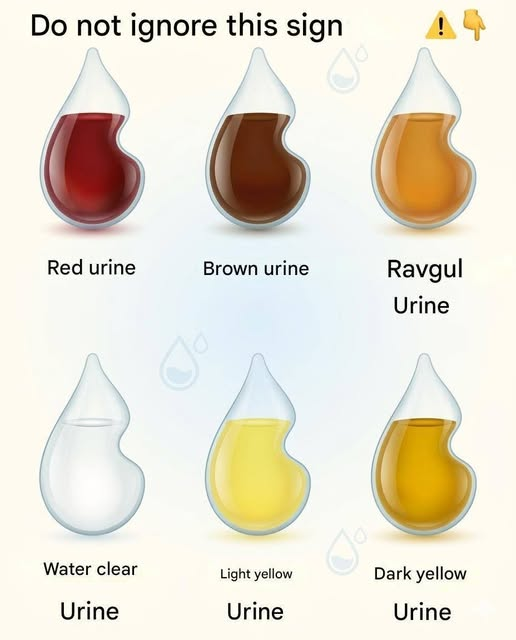
Social media platforms are filled with sensationalized medical infographics illustrating various droplet colors alongside urgent warnings like “Do not ignore this sign.” These viral posts exploit health anxieties and body monitoring compulsions to drive high engagement, shares, and ad revenue.
- The Clickbait Engagement Strategy: Content creators use stark visual charts featuring alarming droplet illustrations and gibberish or mistranslated clinical labels (such as “Ravgul Urine”) to provoke fear. By framing every slight deviation in fluid color as an impending sign of organ failure or severe internal toxicity, these posts compel anxious users to click through ad-heavy slideshows or comment with their own health concerns.
- The Biological Reality of Chromaturia: Urine color variations (chromaturia) are overwhelmingly caused by routine metabolic processes, dietary choices, hydration states, and common medications rather than immediate medical emergencies. Normal urine ranges from pale straw to deep amber, primary dictated by the concentration of urobilin (urochrome), a natural byproduct of heme breakdown excreted by the kidneys.
- Dietary and Pharmacological Color Shifts: Sudden color changes frequently stem from harmless exogenous pigments. Beets, blackberries, and rhubarb can turn urine pink or red (beeturia), while B-complex vitamins cause bright neon yellow, and medications like rifampin, phenazopyridine, or laxatives can shift urine to bright orange or dark reddish-brown.
