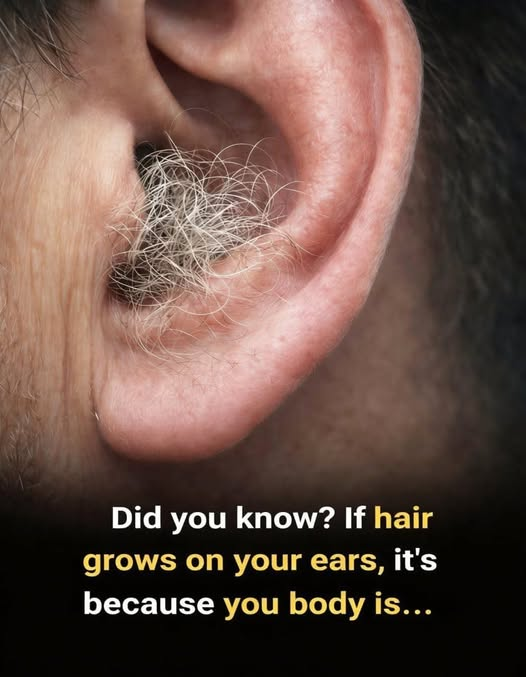
Social media feeds are increasingly filled with dramatic macro images of hyper-hairy ear canals alongside ominous cliffhangers like “Did you know? If hair grows on your ears, it’s because you body is…” These viral posts exploit aging anxieties and physical insecurities to farm clicks, comments, and ad impressions.
- The Clickbait Engagement Strategy: Content creators use digitally exaggerated close-ups and incomplete sentence hooks to provoke disgust and curiosity. By implying that growing ear hair is a secret diagnostic symptom of severe internal organ failure, hormonal collapse, or toxicity, these posts compel users to leave comments asking for answers, driving up algorithmic reach.
- The Biological Reality of Tragus and Pinna Hypertrichosis: Excessive ear hair (often referred to as tragus hypertrichosis) is an extremely common, benign physiological change driven primarily by genetics, aging, and changing sensitivity to androgens (male sex hormones, predominantly testosterone and dihydrotestosterone).
- Anagen Phase Sensitivity in Aging Follicles: As men age, hair follicles in certain regions—such as the outer ear canal, pinna, and eyebrows—become increasingly sensitive to testosterone. Instead of producing fine, soft vellus hair, these aging follicles transition into producing coarse, pigmented terminal hairs with prolonged growth (anagen) phases.
