
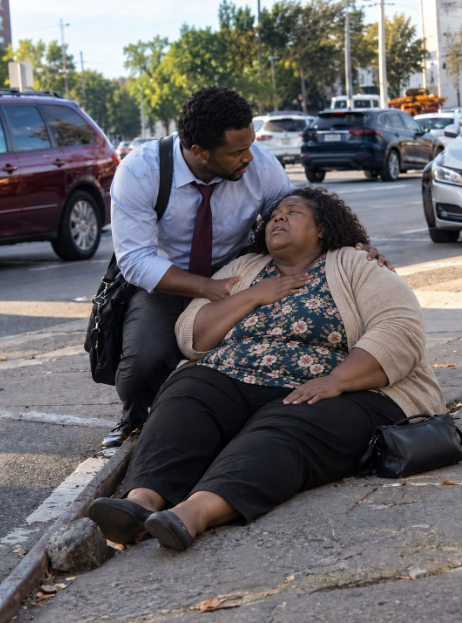
I sat in my car for nearly twenty minutes, watching the exhaust fumes rise from the tailpipes of commuter cars rushing down the avenue. The steering wheel was still cold beneath my hands, but my skin burned with a shame so heavy it felt physical. I looked at my reflection in the rearview mirror—disheveled, pale, and completely stripped of the career I had spent nearly three years building from scratch.
My phone vibrated on the passenger seat, the screen lighting up with a call from my wife, Sarah. I couldn’t bring myself to pick it up, knowing that answering would mean putting into words the impossible reality of what had just happened. How could I explain to her that our rent, our health insurance, and our daughters’ school fees were gone because I had chosen to stop for a dying woman on a stretch of suburban asphalt?
My mind drifted back to the woman on the roadside, her fingers digging desperately into my sleeve as her chest heaved under the brutal morning heat. I remembered the sheer terror in her eyes, the way her breath rattled in her throat, and the frantic ambulance sirens that had finally cut through the air twenty minutes too late for my career. I had done the right thing, yet the world had punished me with cold, efficient precision.
By eleven in the morning, the parking lot had begun to quiet down as the initial rush of office traffic faded into the routine rhythm of the workday. I knew I couldn’t stay in my car forever; my personal belongings, my family photos, and three years of project notes were still sitting on my desk on the third floor. I forced myself to step out of the car, adjusting my crooked tie one last time as I walked back toward the glass doors of the building.
The elevator ride up was agonizingly slow, each ding of the floor indicator feeling like a countdown to another humiliation. When the doors slid open on the third floor, the office was unnaturally quiet, the usual hum of phones and chatter replaced by a heavy, awkward tension. People saw me approaching with an empty cardboard box in my hands, and one by one, my former colleagues lowered their heads or suddenly found urgent tasks on their computer screens.
I walked straight to my corner cubicle, avoiding eye contact with Nick’s glass-walled corner office where he was currently typing away without a single glance in my direction. I began packing my things—the framed picture of my daughters at the lake, my favorite ceramic mug, and the desk lamp I had bought with my own money during my first week on the job. Every item felt lighter than it should have, as if my entire presence in that building was being erased in real time.
As I reached for the bottom drawer to retrieve my old portfolio binders, a heavy shadow fell across my desk, blocking the fluorescent light from above. I paused, expecting Nick to deliver one final lecture about clearing out quickly before security was called to escort me from the premises. But when I looked up, it wasn’t my boss standing over my chair; it was a man in an impeccably tailored charcoal suit, holding a silver-tipped walking cane.
Read the next page to discover who the mysterious man standing over my desk really was.
