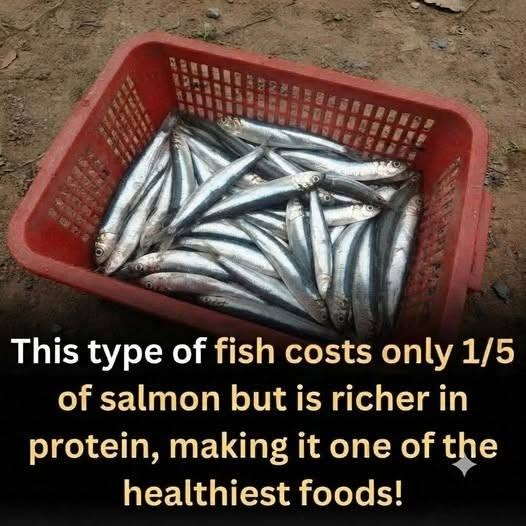
Social media feeds frequently circulate images of raw, small oily fish in plastic crates alongside claims like “This type of fish costs only 1/5 of salmon but is richer in protein, making it one of the healthiest foods!” These viral posts exploit economic inflation, grocery budget anxieties, and health trends to maximize engagement and shares.
- The Engagement Farming Strategy: Content creators leverage price comparisons and sensationalized nutrition claims to provoke immediate interest. By positioning cheap, abundant small fish (such as sardines, anchovies, or sprats) as superior alternatives to expensive farmed salmon, these posts compel budget-conscious users to save the image, share it, and comment asking for exact species or recipes.
- The Biological Reality of Nutritional Profiles: Small pelagic fish—like sardines, anchovies, and herring—are extraordinarily nutrient-dense, offering high levels of Omega-3 fatty acids (EPA and DHA), bioavailable protein, calcium, and Vitamin D. However, claiming they contain far higher protein density than salmon distorts nutritional science; per 100 grams, both salmon and small forage fish provide roughly comparable amounts of high-quality protein (around 20 to 25 grams).
- Bioaccumulation Dynamics and Trophic Levels: Small fish sit lower on the marine food chain (trophic level). Because they feed primarily on plankton and have much shorter lifespans than larger predatory species, they accumulate significantly lower levels of environmental toxins, such as heavy metals like methylmercury, polychlorinated biphenyls (PCBs), and microplastics.
