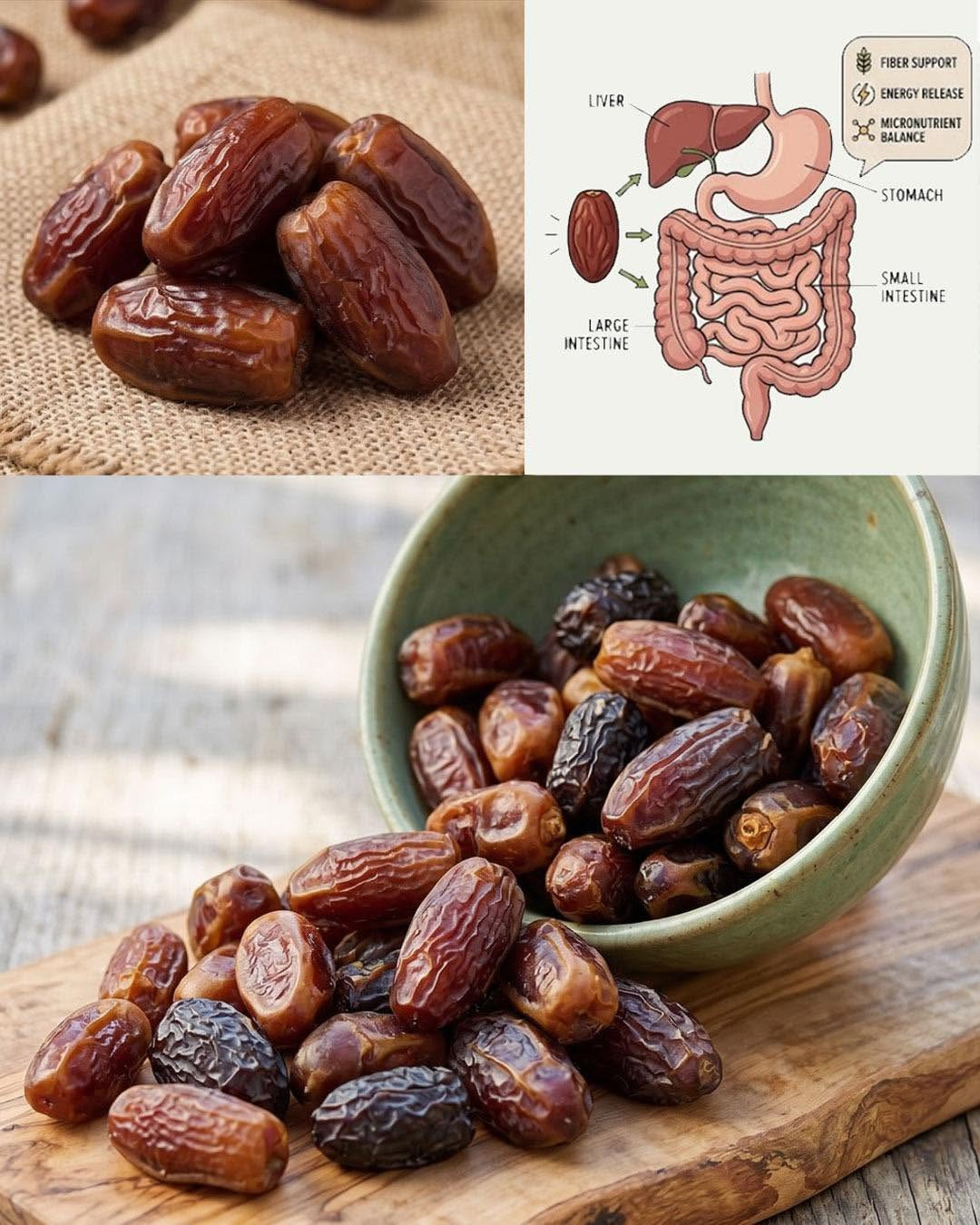
Social media platforms are frequently flooded with health graphics displaying mounds of dried dates alongside stylized organ diagrams of the liver, stomach, and intestines labeled with claims like “Fiber Support, Energy Release, Micronutrient Balance.” These viral posts exploit wellness trends and dietary anxieties to farm clicks, shares, and traffic for unverified health blogs or supplement storefronts.
- The Engagement Farming Strategy: Content creators pair appealing food photography with pseudo-anatomical diagrams to project scientific authority. By implying that eating dates acts as a direct, targeted cure-all for organ detox or gastrointestinal diseases, these posts compel users to save the image, share it with family, and leave thousands of comments asking for specific daily quantities.
- The Nutritional Reality of Dates (Phoenix dactylifera): Dates are genuinely nutrient-dense dried fruits rich in dietary fiber (both soluble and insoluble), potassium, magnesium, and polyphenolic antioxidants. However, viral graphics oversimplify human biochemistry by framing dates as a miraculous organ “detoxifier” rather than what they are: a wholesome, high-calorie whole food.
- The Carbohydrate and Glycemic Density Consideration: Dried dates are naturally rich in simple sugars—primarily fructose and glucose—containing around 60% to 70% sugar by weight. While their fiber content slows down glucose absorption compared to refined sugar, consuming dates in unmonitored excess can still cause rapid blood sugar spikes in metabolic conditions.
