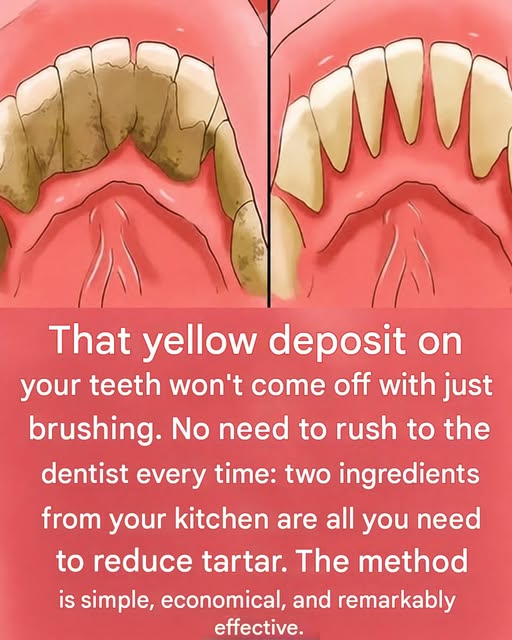
Social media feeds are flooded with viral dental graphics showing heavy tartar buildup miraculously disappearing alongside claims like “two ingredients from your kitchen are all you need to reduce tartar.” These posts exploit dental anxieties and medical costs to drive clicks, shares, and affiliate sales.
- The Clickbait Strategy: Content creators use high-contrast illustrations and dramatic “Before” and “After” visuals to trigger disgust and urgency. By promising a simple DIY alternative to professional dental cleanings, these posts entice users to click through ad-heavy articles or comment to learn the “secret formula.”
- The Biological Reality of Dental Calculus (Tartar): Soft dental plaque is a sticky biofilm composed of bacteria and food residue that can be brushed away daily. However, if plaque remains on teeth for more than 24 to 72 hours, minerals in your saliva (calcium and phosphate) crystallize within it, transforming soft plaque into hard, cement-like dental calculus (tartar).
- The Inability of DIY Hacks to Remove Tartar: Once plaque calcifies into calculus, its crystal structure bonds firmly to tooth enamel. No surface scrubbing, acidic kitchen paste, or oil-pulling technique can dissolve or scrape away calcified tartar safely without destroying the underlying enamel or damaging tender gum tissue.
