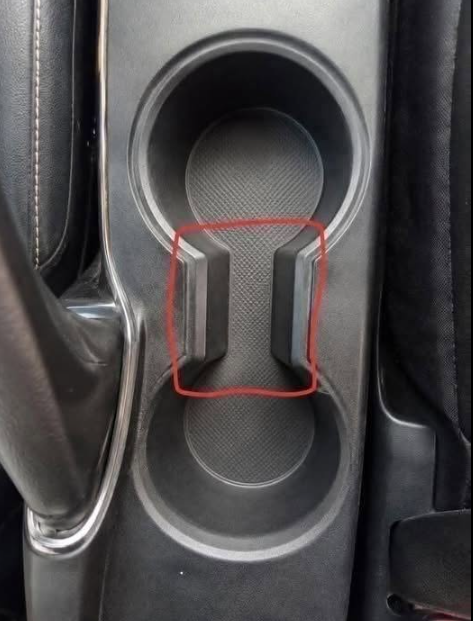
Have you ever looked closely at those rubber or plastic side tabs inside your car’s cup holders and wondered what they are actually meant to hold?
Most vehicle interiors feature a dual or single cup holder configuration located in the center console right next to the parking brake or gear selector.
Embedded neatly into the molded perimeter of these circular cavities are opposing rigid or semi-flexible plastic and rubberized pinch-tabs.
Generations of motorists have stared down into these console pits during red lights, pondering whether these tabs serve a secret industrial purpose.
Popular working theories among drivers range from smartphone parking slots and electronic key fob docks to specialized receptacles for small mint tins or square juice boxes.
Automotive ergonomic and interior design engineers approach cabin layout with a different set of priorities focused on kinetic stability and fluid containment.
Vehicle cup holders must accommodate a vast sociological spectrum of beverage containers ranging from extra-large fast-food paper cups to slim aluminum energy drinks.
Standard circular wells sized generously for a 32-ounce insulated tumbler create a dangerous loose-fit hazard for smaller standard items.
These pinch-point tabs are engineered specifically to flex outward upon insertion and exert inward spring pressure to stabilize smaller items.
Common compatible containers include standard 12-ounce soda cans, thin-walled disposable paper coffee cups, and narrow reusable water bottles.
Without these opposing rubberized or molded plastic grippers, a standard soda can would shift laterally by half an inch or more during normal driving.
Lateral shifting transforms minor bumps and lane changes into noisy rattles, distracting metallic clinks, and potential lid-off tipping events.
Centering the container via the side tabs ensures that fluid weight remains balanced over the vertical center axis of the cup well.
Car manufacturers also design the depth and floor friction pad texture of the well to work in tandem with these lateral pinch-grippers.
Lower rubber mats inside the console catch bottom condensation while the side tabs prevent rotational spinning or tipping torque during sharp cornering maneuvers.
Continue reading Part 2: Real-World Use, Debris Catching, and Modern Evolution
